
 Green Talks

News Articles
Veteran activist warns of ‘shrinking space’ for green advocacy in Hong Kong
 23 Mar 2026
- Category
- Keywords
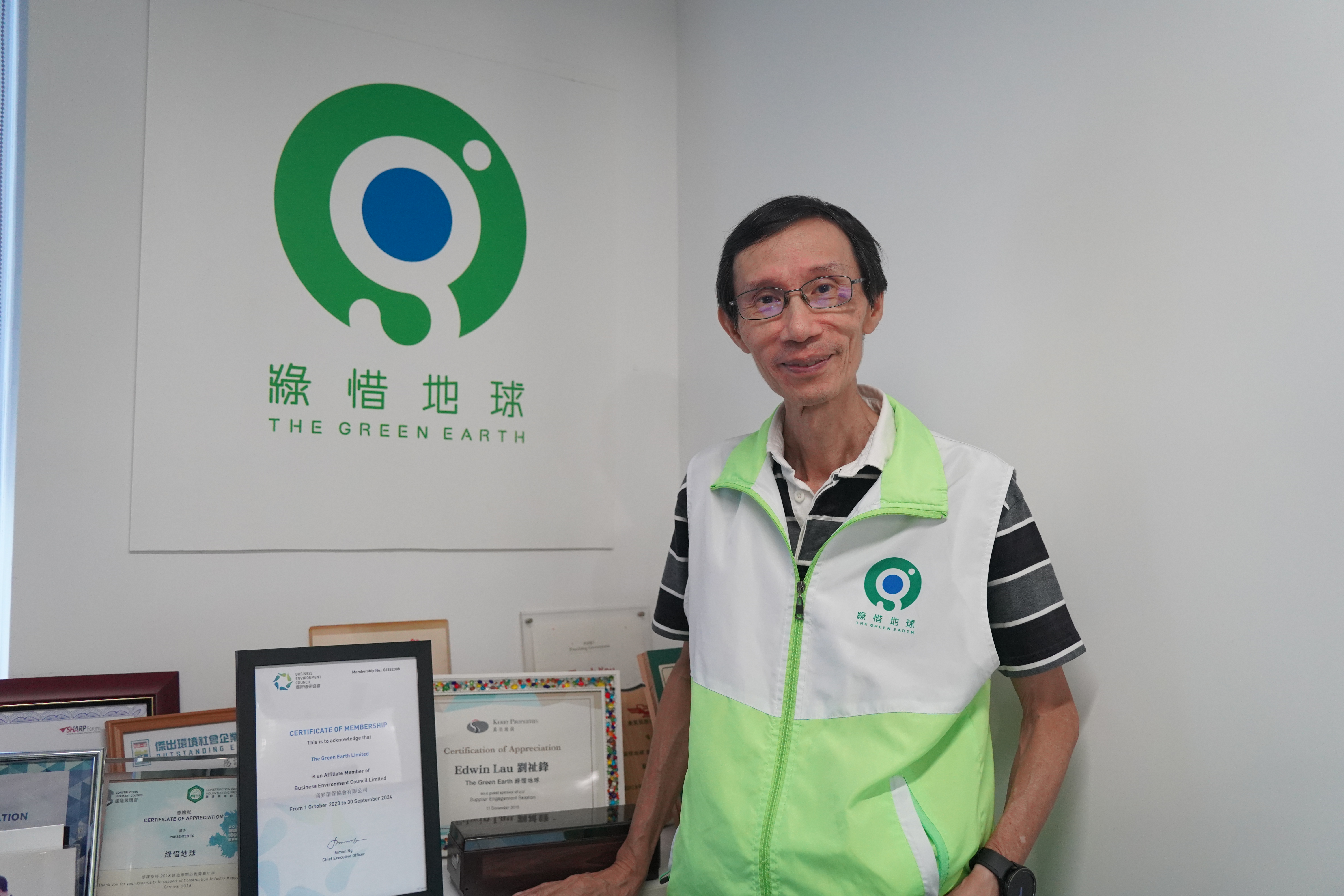
(21 Mar 2026, SCMP) After decades at the front lines campaigning for environmental protection, The Green Earth founder Edwin Lau Che-feng is slowing down to focus on his health and hobbies. The 68-year-old has been one of the most vocal environmentalists championing a waste-charging scheme for more than two decades.
Lau still remembers May 27, 2024, when the government abruptly paused the waste-charging bill, as if it were yesterday. The suspension was the biggest blow in his 36-year career. “It feels impossible. Never in my life have I heard of a law in Hong Kong that has already been passed, yet fails to be implemented,” he said.
The pay-as-you-throw policy, which required residents to use designated prepaid trash bags, was proposed in 2004 and passed by the legislature in 2021. It was to take effect in 2023 after 18 months of preparation. But the government shelved the scheme indefinitely after two delays due to widespread public concerns over its impact on the cost of living and uncertainty about the implementation.
“Authorities could have led with waste charging within government premises first,” Lau said. “The government lacked the determination and confidence, as well as the initiative to take action and implement this bill.” Reflecting on the ups and downs of his career, Lau recalled fond memories of changing sceptics’ minds and addressed the challenges posed by what he said was the government’s dwindling engagement with green groups, warning of a “borrowed future” in which Hongkongers live at the expense of the next generations.
His journey started in 1989 when, in his early thirties, he came across a newspaper ad and joined Friends of the Earth, rising through the ranks to CEO over 26 years.
In the early 1990s, Lau pioneered the waste paper recycling programme in schools, promoted three-colour recycling bins in public housing estates and pushed for the idling engine ban. Sustainability was a rare focus then, and Lau often got the cold shoulder from the commercial sector when pitching green measures.
“I developed a cast-iron heart – rejections just slide right off me,” he said with a chuckle. “When you find your mission in life, there is no such thing as overtime [work].”
His proudest achievement came in 2004, when a year-long protest by green groups blocked a decision by developers to demolish all seven residential blocks of the never-occupied, fully refurbished Hunghom Peninsula estate to redevelop luxury flats.
Dubbed the “world’s largest demolition of new buildings”, the move was expected to create 190,000 tonnes of construction waste and substantial pollution. The plan was withdrawn after nine months.
“That campaign was an uphill battle against developers, who planned to make billions out of the redevelopment project,” he said. “But demolishing the estate would send a wrong moral message to the young, telling them that money could override everything, including environmental protection.” He cited this as an example of how mounting public pressure could bring positive changes in Hong Kong decades ago.
Lau said the trust he built with the government over the years led to his appointment to various advisory bodies, such as committees on environmental campaigns and waste reduction in the 1990s, and the Food Wise Hong Kong Steering Committee and the Advisory Council on the Environment in the 2010s.
In 2009, he was awarded Hong Kong’s Medal of Honour for his “valuable contribution to the promotion of environmental protection and education” by then chief executive Donald Tsang Yam-kuen.
“In the early days, green groups had a key role in defending the government’s push for environmentally friendly policies and explaining the rationale to the public as a credible third party,” he said, pointing to a greater sense of openness from the government. “However, in recent years, it appears the government no longer treats us as an ally but as someone getting in their way, and the relationship has been more tense.”
The government has substantially reduced meetings with green groups and recycling businesses since 2019 and the Covid-19 pandemic, although they participate in major events such as policy address consultation sessions.
“It has been harder to meet with officials. The space for advocacy has been shrinking,” Lau said. With fewer chances to speak to the government directly, Lau focused on amplifying voices through the media. “I feel grateful that the media was open to listening and covering green policies from a neutral perspective and made space [for us] to voice out,” he said. “If this [channel] is gone as well, it will be a huge blow.” The importance of speaking up is what eventually led Lau to start over in his late fifties.
When Friends of the Earth moved away from policy advocacy in 2015, Lau left the organisation. Determined to keep the conversation with the public and government going, he founded The Green Earth three months later in February 2016. In a small office in Kwai Hing, Lau started a three-person team focused on policy advocacy.
Lau stepped down as The Green Earth’s executive director last August, but the advocate said he was happy with what the NGO had achieved as it marked its 10th anniversary this year, despite it being “twice the effort for half the results”.
Focused on data-driven and policy research advocacy, The Green Earth conducted waste audits and promoted sustainable development of hiking trails, in addition to waste reduction lobbying and education efforts.
Lau said Hong Kong must stop treating sustainability as an “add-on” and blend the concept into every policy. Citing the waste pyramid model, he noted the government was focused more on recycling and waste treatment, which aligned with the bottom of the pyramid – effective in tackling but not preventing waste.
“The most cost-effective strategy is waste avoidance and reduction, using the least resources to achieve the largest effect,” Lau said.
According to WWF data from 2021, Hong Kong’s ecological footprint ranked third-worst in the Asia-Pacific region and 14th globally.
Commenting on the city’s environmental movement, Lau said: “The resources we use are borrowed from the future time, future people. If we do not have a mindset to treasure existing resources, [they] may be depleted soon.”
Veteran activist warns of ‘shrinking space’ for green advocacy in Hong Kong
 Back
Back
 14 Jan 2025